The Anatomy of the Sack Jacket: Defining Classic Menswear’s Greatest Understatement
Few garments in the history of tailored clothing are as misunderstood, mischaracterized, or utterly foundational to the modern wardrobe as the sack jacket. To the uninitiated, the name conjures images of something crude—a shapeless, utilitarian garment hastily thrown together, or worse, a literal potato sack with armholes.
But in the lexicon of classic tailoring, the sack jacket is nothing short of royalty. It is the structural backbone of traditional American style, an engineering marvel of design minimalism, and arguably the most comfortable tailored jacket ever conceived.
As we look at the evolution of modern style, understanding the sack jacket isn't just a history lesson—it is a blueprint for effortless, lived-in elegance. Let’s unpick the seams of this sartorial icon, separate foundational construction from optional styling choices, and explore why it deserves a permanent place in your digital haberdashery.
What Is a Sack Jacket, Sack Coat, or Sack Suit? (And What It Isn’t)
To answer the most common question found on Google—What is a sack jacket?—we have to look at how a tailored jacket is built from the inside out.
A sack jacket (or sack coat) is a classic men's tailored jacket defined by a straight, unsuppressed drape cut with no front waist darts. Originating in the mid-19th century as a casual alternative to stiff formal frock coats, it forms the structural foundation of traditional American Ivy League style and classic menswear. A sack jacket is a lounge coat or suit jacket characterized by a straight-hanging cut that bypasses aggressive waist suppression. The true, non-negotiable hallmark of a sack jacket or sack coat is that it is cut without front darts.
Despite its name, it does not look like a literal sack. Instead, it drapes naturally over the wearer's torso, skimming the body rather than squeezing it. It is the ultimate expression of casual tailoring—a garment designed to look best when you stop thinking about it.
Why Is It Called a American Sack Suit? (How the Term Evolved)
According to organic search query data, another frequent point of confusion for modern readers is Why is it called a sack suit? The name has nothing to do with burlap. Instead, it is a linguistic evolution of the French term sacque, a mid-1840s method of cutting garments from two flat pieces.
Prior to this innovation, men's formal attire—like frock coats and morning coats—required a highly complex, multi-paneled construction with a rigid, horizontal waist seam stitched across the middle to force a tight, hourglass fit. The sacque coat bypassed all of that, cutting straight down from the shoulders to the hem in a single, continuous line.
When tailoring houses originally began using this continuous, undarted cut to produce full, matching sets of clothing made from the exact same roll of fabric (jacket, trousers, and sometimes a vest), they named the entire matching set a "Sack Suit". It was a revolutionary departure from the mismatched, ultra-formal separate uniforms of the Victorian era.
How the Definition Evolved for Modern Readers
Over the last century, menswear underwent a massive structural shift. Formal separate coats phased out entirely, and matching suits became the global baseline for tailored business attire. At the same time, structured European tailoring styles gained massive market dominance, making front darts the absolute default standard for global manufacturing.
Because almost every standard suit jacket on a retail rack today is cut with front darts to aggressively pinch the waist, the modern definition of the term has flipped. Today, a sack suit simply means any matching suit that features a traditional, undarted sack jacket instead of a standard darted jacket. The suit is defined entirely by the unique, straight-hanging construction of the coat paired with it.
The Core Construction: It’s All in the Cut
In menswear journalism, writers frequently mistake regional styling details for universal construction rules. You will often hear that a sack jacket must feature a 3-roll-2 lapel, a hook vent, and patch pockets. This is historically inaccurate.
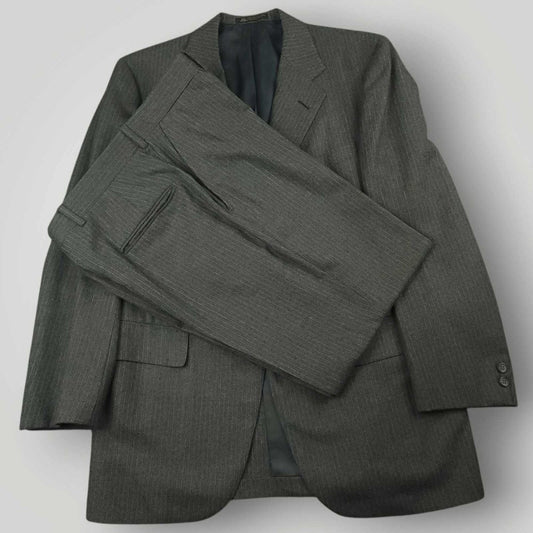
Those specific details are classic hallmarks of mid-century American Ivy League style, but they do not define the sack jacket itself. A sack jacket can adapt to almost any button configuration, venting style, or pocket choice. The only non-negotiable feature is the lack of front darts.
No Front Darts (The Defining Trait)
Most modern suit jackets feature darts—vertical folds of fabric cut and stitched into the front panels under the ribcage to pull the material inward, suppress the waist, and create an artificial hourglass shape.
A true sack jacket has zero front darts. Because the fabric is left uncut down the front, the jacket relies entirely on the natural drape of the cloth to outline the torso. This creates a clean, unsuppressed, straight silhouette.

The Anatomy of Variation: Vents, Buttons, and Patterns
Because the sack jacket is defined solely by its undarted front panels, it has appeared in dozens of distinct iterations over the last two centuries across different global style centers:
- The Button Configurations: While the 3-roll-2 button layout is the most famous American iteration, sack jackets are routinely built with standard two-button closures, rigid three-button fronts, or even four-button layouts found on vintage French workwear and utility coats.
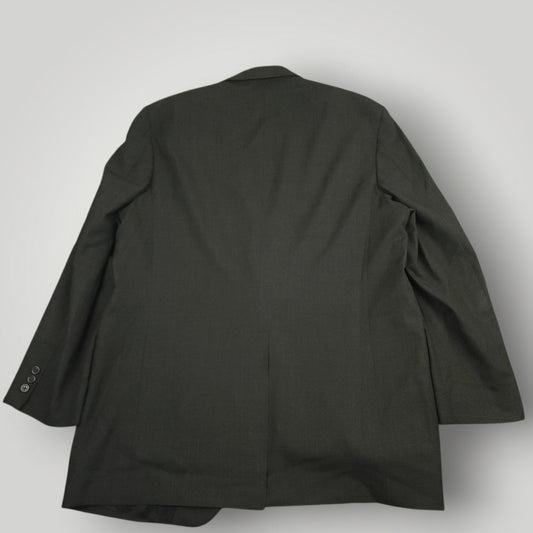
- The Venting: A sack jacket does not require a hook vent. Early late-Victorian sack coats were entirely unvented to maintain a solid block of fabric at the back. Modern or European interpretations often feature dual side vents for easier access to trouser pockets, while classic American versions lean into a center vent.
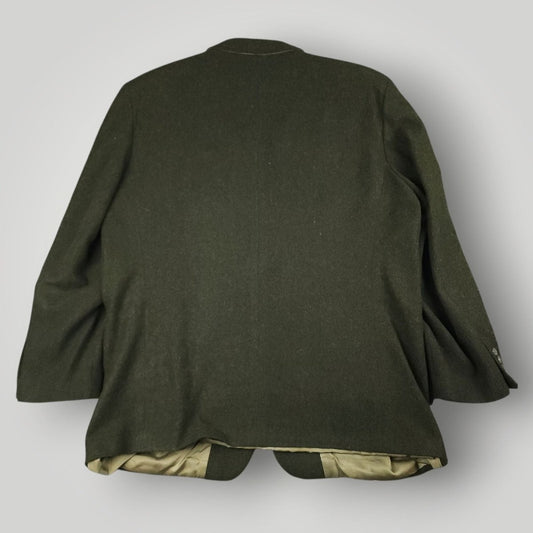
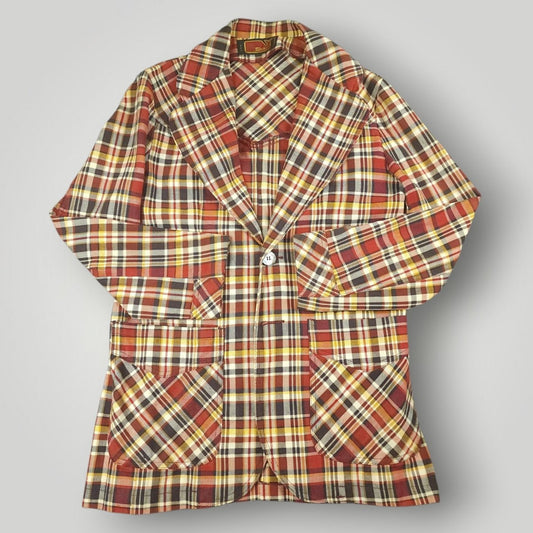
- The Fabric Flexibility: While most traditional heritage sack suits were executed in cold-weather wools, the undarted construction works beautifully across any fabric medium. You will find them in everything from heavy winter tweeds and flannels to casual summer cottons, crisp linens, and lightweight seersuckers.
| Feature | The Sack Jacket Cut (Core Definition) | Modern European/English Cut |
| Front Darts | None (Clean, straight front drape) | Dual front darts (Aggressive waist suppression) |
| Waist Shape | Natural, cylindrical, and unforced | Articulated, contoured, and architectural |
| Styling Flexibility | High (Can be 2-button, 3-button, hook-vent, or side-vent) | Rigid (Typically demands darts to execute the style) |
| Primary Focus | Comfort, fabric drape, and ease of movement | Formal posturing, body contouring, and structure |
Who Popularized the Sack Coat? A History of "The Great Equalizer"
Answering another critical user question uncovered in the search data—Who popularized the sack coat?—requires exploring a masterclass in democratic design history.
The 19th-Century Shift
Introduced as casual daywear to contrast rigid, multi-paneled formal coats, the sack suit gained mass popularity in the late 1800s. Ready-to-wear clothing manufacturers realized that because the undarted sack jacket lacked strict waist suppression, it was dramatically easier to mass-produce in standardized sizes. It fit a wide variety of body types decently right off the rack, making tailored clothing accessible to the general public for the very first time.
The Brooks Brothers Ivy Era
By the turn of the 20th century, companies like Brooks Brothers adopted the silhouette, introducing the legendary "No. 1 Suit." They paired the undarted sack cut with a soft shoulder, a center hook vent, and a 3-roll-2 lapel, single-handedly codifying what the world now knows as the "Ivy League Look".
From the 1920s through the 1960s, this specific version of the sack suit spread from the campuses of Harvard, Yale, and Princeton directly into the boardrooms of Wall Street and Madison Avenue. It was popularized by cultural icons ranging from jazz legend Miles Davis to President John F. Kennedy.
The Great Equalizer
In an era when European tailoring was used to explicitly telegraph class, wealth, and aristocratic standing via custom-molded silhouettes, the American sack suit did the exact opposite. It was dubbed "the great equalizer". Because it didn't force an artificial shape upon the body, it looked just as natural on a working-class store clerk as it did on a high-flying corporate executive or a university professor.
Why the Sack Jacket Belongs in Your Modern Wardrobe
In a contemporary style landscape dominated by either hyper-casual loungewear or overly stiff formal suits, the sack jacket bridges the gap perfectly.
1. Unmatched Comfort and Movement
Without stiff canvas interlinings or darts restricting your midsection, a sack jacket moves with you. It offers an ease of movement that modern slim-fit jackets simply cannot match. It’s a tailored piece you can comfortably wear while driving, traveling, or working at a desk all day.
2. Effortless "High-Low" Versatility
Because the sack jacket is inherently casual, it transitions seamlessly across different dress codes. You can wear an undarted wool or cotton sack suit with a crisp shirt and tie for a formal presentation, then split the suit up and wear the jacket over a knit polo and denim for the weekend.
3. A Solution for Real Body Types
Aggressively darted jackets are notoriously unforgiving; if you possess an athletic, broad-chested build or carry weight around the midsection, European cuts tend to pull, buckle, and pinch at the button point. The straight cut of a sack jacket drapes cleanly over your natural shape, offering a flattering, masculine silhouette that doesn't restrict your movement.
How to Wear a Sack Jacket Today
Styling a sack jacket today isn't about historical reenactment; it's about leaning into its relaxed heritage while playing with modern textures, visual scales, and casual layers. Because the jacket lacks front darts and hangs straight down, it functions less like a rigid corporate uniform and more like a structured overshirt or a clean chore coat.
Here are three distinct, substantial outfit formulas to anchor a sack jacket in a contemporary rotation:
1. The Classic Ivy Standard (The Traditional Texture)
This look pays homage to classic mid-century aesthetic principles but updates the proportions so it feels entirely current. It relies heavily on traditional, high-contrast menswear patterns.
- The Jacket: A sack jacket featuring a bold, visually striking pattern—such as a sharp houndstooth, a rich herringbone, or a classic glen check.
- The Shirt: A classic white or university-striped Oxford Cloth Button-Down (OCBD). Look for a soft collar with a generous roll that looks great unbuttoned and worn without a tie.
- The Trousers: Mid-rise, flat-front khaki chinos or stone-colored trousers. Avoid ultra-slim cuts; a straight-leg or relaxed-tapered silhouette complements the natural, undarted line of the jacket beautifully.
- The Footwear: Dark brown suede or cordovan penny loafers worn with texturized camp socks.
- The Finishing Touch: Keep the jacket completely unbuttoned to let the straight front panels frame the pattern and layers naturally.
2. The Casual Capsule Essential (The Minimalist & Layered Approach)
Because modern design houses have embraced the clean lines of the sack cut, it translates perfectly into a sleek, contemporary capsule wardrobe. This styling highlights how an undarted tailored coat can easily substitute for a casual bomber or utility jacket.
- The Jacket: A solid, understated sack jacket (such as navy, charcoal, or olive) that lets the clean, undarted silhouette take center stage.
- The Base Layer: You have massive flexibility here. For a clean, minimalist look, opt for a solid, heavyweight crewneck t-shirt. If you want to lean into a more rugged, casual look, layer the jacket directly over a high-quality graphic tee or a clean, slim-profile pullover hoodie. The undarted, boxier cut of the jacket means it won't pinch or bind over a hoodie's fleece fabric.
- The Trousers: Tailored drawstring trousers, or a great pair of straight-leg dark denim jeans finished with a clean, single turn-up cuff.
- The Footwear: Minimalist white leather sneakers or a classic low-profile leather derby shoe.
- The Finishing Touch: Let the hoodie's hood sit cleanly over the collar of the jacket, creating a sharp contrast between tailored lines and relaxed sportswear.
3. The Broken Suit (The Elegant High-Low)
If you own a full sack suit, splitting the pieces up allows the jacket to act as an incredibly versatile separate sport coat that effortlessly bridges formal and casual boundaries.
-
The Jacket: The undarted jacket from a patterned sack suit—think a subtle windowpane plaid or a chalk-stripe.
- The Shirt: A clean denim western shirt or a fine chambray button-down. The ruggedness of a utilitarian shirt fabric creates a brilliant contrast against a beautifully patterned tailored coat.
- The Trousers: Instead of matching suit pants, opt for solid, high-quality wool or heavy cotton trousers that pick up one of the secondary colors in the jacket's pattern (e.g., solid charcoal trousers to ground a grey plaid jacket).
- The Footwear: Dark chocolate brown leather Chelsea boots or snuff suede chukka boots.
- The Finishing Touch: Slip a silk or wool-knit pocket square into the breast pocket, letting it sit loosely rather than cleanly folded.
A Golden Rule: Embrace the Rumple
No matter which formula you choose, do not try to press a sack jacket into razor-sharp submission. Because the jacket relies on a natural, boxier drape rather than a molded body shape, it looks its best when it has a bit of life to it. Let the natural fibers wrinkle and settle naturally on your frame. The true charm of this style is its sprezzatura—the appearance of elegant carelessness.
Curating Your Own Digital Haberdashery
Finding an authentic, undarted sack jacket on the modern high street is nearly impossible—but you don't have to hunt through dusty thrift racks to find one.
At Bearded Yankee, we systematically source, measure, and curate premium heritage tailoring built to last. Whether you are hunting for a heavy winter herringbone or a casual tropical wool glen check sack jacket, shop our inventory of men's secondhand sack jackets and coats and elevate your wardrobe with a piece of timeless Americana.
Final Thoughts: The Timeless Appeal of Understated Tailoring
The sack jacket is a masterclass in design subtraction. By removing unnecessary darts, heavy padding, and rigid internal architecture, it shifts the focus entirely to the pattern of the cloth, the natural build of the wearer, and the sheer joy of comfortable dressing.
Whether you hunt down an authentic vintage piece on the secondary market or invest in a modern unstructured interpretation, wearing a sack jacket means celebrating a legacy of democratic, effortless style. It was built for function, longevity, and comfort—proving that sometimes, doing less is exactly what makes a garment legendary.