The Shape of Style: The Ultimate Guide to Notch, Peak, and Shawl Lapels
Share
In the architecture of classic tailoring, if the width of your jacket’s front dictates its visual scale, it is the structural shape of the lapel that determines its core identity, formality, and historic mood. Yet, walk into any tailoring forum or skim modern style threads, and you will find a persistent confusion regarding suit lapel types and uses. Men routinely mix up lapel style (the horizontal width of the fabric in inches) with lapel type (the actual perimeter geometry of the cut). They interchange terms blindly, mistakenly believing that a certain shape is locked into a specific size, or that choosing a particular cut automatically dictates how broad their shoulders appear.
To navigate menswear with the authority of a seasoned haberdasher, you must understand that form and scale are completely independent dimensions. A jacket can possess a sweeping, four-inch notch lapel or a razor-thin, two-inch peak lapel. Having established the strict rules of horizontal scale in our previous entry, we must now answer a fundamental question: What are the three different lapels, and how do their distinct geometries dictate when, where, and how you should wear them?
Form vs. Scale: The Fundamental Distinction
Before a gentleman can choose the correct jacket for his frame, he must recognize that the front of a tailored garment is plotted on two entirely separate, independent axes: Form and Scale.
- Lapel Style (Scale/Width): This refers exclusively to the horizontal dimension of the cloth at its widest point. It dictates the visual weight on your chest, moving from minimalist slim profiles to commanding, wide traditional lines.
This refers strictly to the perimeter geometric silhouette of the collar assembly—the actual structural cut of the cloth. This dictates the angles, the placement of the seams, and the innate formality of the garment (Notch, Peak, or Shawl).
Many men conflate these two concepts, assuming a certain shape automatically dictates a certain width. It does not. It is entirely possible to find an ultra-slim peak lapel or a massive, sweeping wide notch lapel. To build a cohesive wardrobe, you must master both elements independently.
Sartorial Note: If you are looking to master horizontal measurements, proper accessory scaling, and how to choose between slim, regular, and wide cuts, refer to our comprehensive guide, The Scale of Style: Slim vs. Regular vs. Wide Lapels. In this entry of The Almanac, we are setting width aside completely to focus strictly on the structural geometry of the three foundational lapel cuts.
What is a Lapel, and Why Does It Exist?
To clear up the common confusion among modern shoppers, we must first address a basic architectural question: What is a lapel, and is a lapel the same as a collar?
In clothing construction, a lapel and a collar are two entirely separate components that are stitched together to frame your neck and torso.
- The Collar: This is the band of fabric that wraps completely around the back and sides of your neck.
- The Lapel: This is the continuation of the jacket’s front panels that fold backward over your chest, traditionally known as the jacket reverse.
The precise line where the collar meets the lapel is joined by a seam called the gorge. Together, they form a unified visual element, but they serve completely different functions. Why is it called a lapel? The word originates from the Old English læppa, which structurally referred to a loose flap or fold of a garment. Historically, early military and civilian coats were buttoned fully up to the chin for protection against inclement weather. When the top buttons were undone and the heavy wool flaps were turned back to allow the chest to breathe, the modern revers—or lapel—was born.
Today, while a lapel is technically not strictly necessary to keep a jacket closed, is a lapel necessary on a suit? The answer is an absolute yes. A suit jacket or sport coat stripped of its lapels ceases to be traditional tailoring; it becomes a tunic, a worker's jacket, or a piece of casual outerwear. The lapel is the defining signature that elevates a suit like jacket into a piece of formal, structured elegance. It adds three-dimensional depth, houses the canvas that shapes your chest, and acts as the canvas for your neckwear.
Let us map out the guide to different types of lapel styles on suits, looking directly at the three foundational shapes that define the genre: Notch, Peak, and Shawl.
The Notch Lapel: The Modern Baseline
Anatomy and Definition of the Step Cut
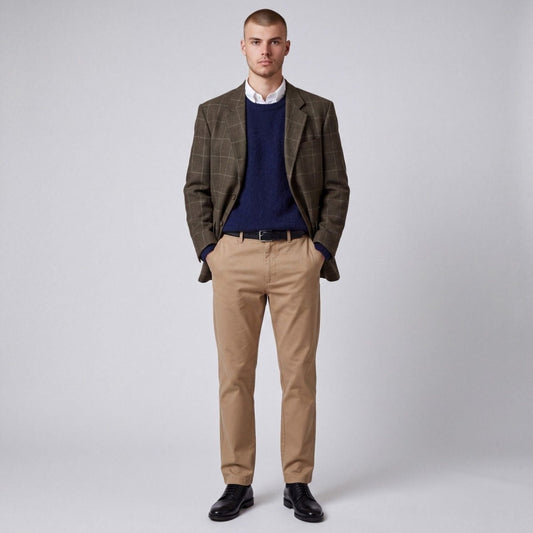
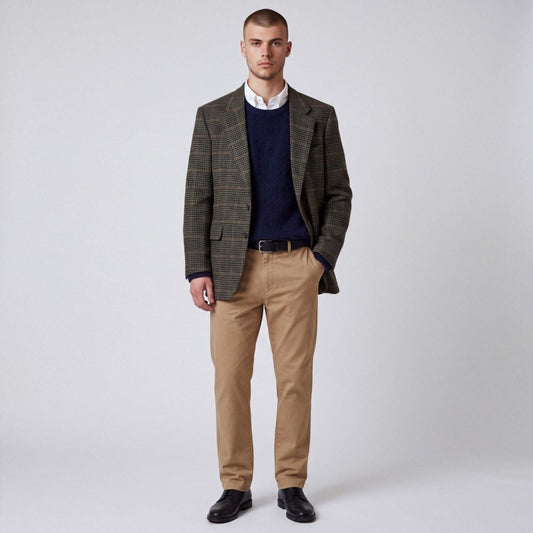
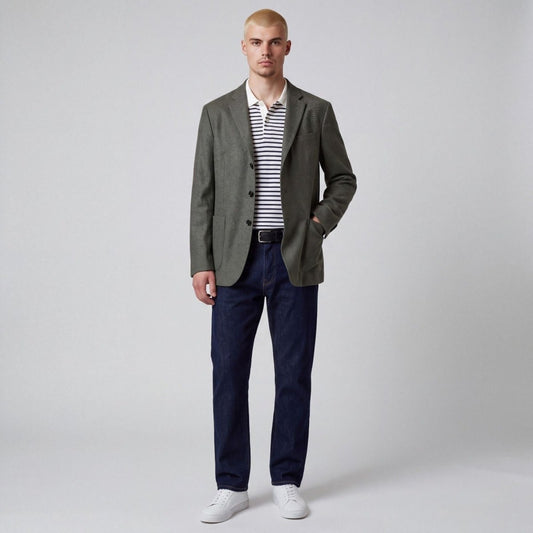
When reviewing what are the main types of suit jacket lapels, the notch lapel is the uncontested workhorse of the modern wardrobe. It is defined by a V-shaped indentation—or "notch"—cut into the edge of the fabric where the collar meets the lapel. In technical tailoring terms, this is often called a "step collar" or "step lapel." The bottom edge of the collar sits at a right angle or obtuse angle to the top edge of the lapel, creating an open, triangular wedge that points inward toward your chest.
Formality, Versatility, and Best Uses
The notch lapel is the most versatile and ubiquitous shape in tailoring history. It sits squarely in the middle of the formality spectrum, making it appropriate for roughly 90% of all sartorial scenarios. It is the absolute standard for everyday business suits, casual blazers, and independent coat lapel styles. If you are building a foundational wardrobe from scratch, your first two suits should feature notch lapels because they transition seamlessly from a high-stakes corporate interview to a relaxed weekend lunch with zero friction.
- The Benefits: It is understated, visually balanced, and completely unpretentious. It does not demand attention, allowing the quality of your jacket's cut and fabric weave to stand out. It is virtually impossible to look out of place or overdressed in a classic regular notch lapel.
- The Drawbacks: Because it is the default choice for mass-market manufacturing, it can occasionally lack a distinct point of view. If cut too skimpy or paired with cheap fabrics, it can look uninspired or look like a generic corporate uniform.
- Body Type Compatibility: The notch lapel is a universal shape that complements any physical frame. Because it mirrors the natural angles of the human jawline and shoulders, it frames the neck quietly without drawing focus away from your face.
The Peak Lapel: Traditional Power and Presence
Anatomy and Definition of the Upward Edge
The peak lapel is defined by sharp, aggressive angles that point upward and outward toward your shoulder joints, terminating just below the shoulder seam. Unlike the notch lapel, there is no open triangular step at the gorge seam. Instead, the lapel edge cuts tightly against the collar and extends past it, creating a deep, closed "V" that accentuates the horizontal span of your chest.
Are Peak Lapels Out of Style?
To answer this common query directly: Are peak lapels out of style? Absolutely not. In 2026, peak lapels are experiencing a massive renaissance among style enthusiasts who are rejecting the boring, hyper-minimalist corporate styles of the past decade.
While they require a bit more sartorial confidence to pull off than a standard notch, a well-cut peak lapel projects an aura of timeless, old-school tailoring authority. It is firmly rooted in the golden eras of menswear—reminiscent of the robust drape suits of the 1930s and 1940s—making it a favorite for men who prefer an intentional, mature personal style over fleeting fast-fashion trends.
Peak or Notch Lapel: Which is Better?
When debating which is better peak or notch lapel, the answer depends entirely on your intent and the specific suit lapel types and uses you are targeting:
- Choose the Notch Lapel for: Versatility, daily office wear, casual sport coats, and an understated, classic look.
- Choose the Peak Lapel for: Formality, making an assertive style statement, double-breasted jackets (where peak lapels are historically mandatory), and formal social events like weddings or galas.
- The Benefits: The peak lapel is a powerful tool for visual correction. Because the lines point dramatically upward and outward, they draw the observer's eye toward your shoulders, creating an artificial illusion of upper-body breadth while lengthening your torso. It instantly elevates a simple suit into something commanding and formal.
- The Drawbacks: It is inherently formal and assertive. A peak lapel is difficult to dress down; wearing a casual, unlined summer sport coat with aggressive peak lapels can look visually conflicted.
- Body Type Compatibility: Peak lapels are the ultimate weapon for shorter men or those with a slighter frame, as the strong upward diagonals elongate the silhouette and add perceived height. They are also excellent for athletic builds, as they emphasize a natural V-taper chest.
The Shawl Lapel: Evening Elegance
Anatomy and Definition of the Continuous Curve
The shawl lapel stands entirely apart from the notch and the peak because it features a completely continuous, unbroken sweep of cloth running from the back of the neck down to the fastening button. There is no notch, no peak, and no visible gorge seam on the face of the fabric. It is a smooth, elegant ribbon of silk, satin, or grosgrain that flows effortlessly down the jacket front, softening the straight lines of the torso with a classic, rounded geometry.
Is a Shawl Lapel Too Formal? Tuxedo Rules
When assessing which lapel is best for a tuxedo, the shawl lapel shares the throne with the peak lapel. However, its use cases are highly restricted. To answer the query: Is a shawl lapel too formal? The answer is yes, if you are trying to wear it outside of evening wear.
The shawl lapel is strictly reserved for formal evening dress—specifically black-tie tuxedos, dinner jackets, and classic smoking jackets. It traces its history back to Victorian-era velvet smoking jackets, designed to protect a gentleman's clothing from falling ash while lounging at his club. Because of this rich lounge-heritage, a shawl lapel should never be found on a business suit or a daytime sport coat. It is a purely celebratory, night-focused cut engineered for candlelight and formal elegance.
- The Benefits: It is undeniably romantic and fluid. The smooth, satin-faced curves frame a crisp tuxedo shirt and black bow tie with a level of graceful sophistication that sharp angles cannot duplicate.
- The Drawbacks: Zero versatility. You cannot wear a shawl lapel jacket with denim, a casual button-down, or to a standard business meeting without looking like you are wearing a costume.
- Body Type Compatibility: Because of its rounded, organic lines, the shawl lapel is excellent for men with sharp, angular facial structures or highly athletic frames, as it balances out aggressive lines. However, men with very round faces or heavier builds should approach narrow shawl lapels with caution, as the continuous curves can occasionally echo and emphasize softness in the torso.
Technical Tailoring Questions
As men explore the different types of lapels and determine which styles best suit their frames, technical questions regarding modification frequently arise:
Can I get a suit jacket tailored to change the lapel style?
To answer this direct consumer query: Can I get a suit jacket tailored to change the lapel style? The short answer is no. The lapel shape is fundamentally baked into the structural blueprint of the jacket’s front canvas and facing cloth. To change a notch lapel into a peak lapel, a tailor would have to completely dismantle the chest canvas, cut an entirely new piece of matching fabric for the jacket front, and reset the entire collar assembly. The labor cost alone would easily exceed the price of a brand-new, premium custom suit. You can get a blazer tailored to adjust its sleeve length, waist suppression, or trouser hem—but you must accept the lapel type it was born with.
What is the purpose of a lapel buttonhole?
Located on the left lapel of almost every quality suit jacket sits a solitary, seemingly non-functional buttonhole. What is the purpose of a lapel buttonhole? This is a functional vestige of menswear history. As mentioned earlier, when classic jackets were buttoned fully up to the neck, this buttonhole closed against a hidden button under the right collar. Today, while jackets are worn open at the chest, the hole remains as a traditional mark of quality tailoring. It serves as the physical anchor point for fresh flowers (boutonnières) at weddings or classic lapel pins.
The Etiquette of Accoutrements: Lapel Pins & Rules
To wear a lapel properly is to understand how to accessorize it without cluttering your chest. If you are wondering who should wear a lapel pin, the rules are governed by a strict sense of sartorial restraint.
- What is the rule for lapel pins? Less is always more. A lapel pin should never be worn simply for the sake of decoration or out of a fast-fashion trend. It should carry meaning—such as a military decoration, a discrete corporate emblem, a club insignia, or a seasonal flower at a wedding.
- The Placement Rule: Your pin must always be placed on the left lapel, inserted directly through or just below the lapel buttonhole. It should sit flat against the cloth, parallel to the lapel seam, and should never compete with a pocket square. If your pin is exceptionally loud or large, leave the pocket square at home to ensure your chest remains uncluttered and balanced.
Final Thoughts: The Visual Geometry of Choice
Ultimately, mastering what is a lapel suit for men comes down to recognizing that every angle on your jacket changes the narrative of your silhouette. The universal, reliable notch lapel keeps you grounded in versatile, everyday elegance. The assertive, upward-sweeping peak lapel projects traditional power, broadening your shoulders and elevating your presence. And the smooth, rolling shawl lapel is the absolute crown jewel of formal evening wear, reserved for moments of celebration and pure elegance.
By understanding the distinct geometry of these three cuts, you can stop chasing passing fads and begin selecting your tailoring with an educated, intentional eye—ensuring your clothing always states exactly who you are with absolute clarity.