The Ultimate Guide to Tweed Jackets: History, Styling, and the Battle of the Weaves
If you’ve spent any time exploring heritage menswear, classic tailoring, or the enduring appeal of Ivy League style, you will invariably find yourself drawn to a singular, rugged fabric that has braved both Scottish gales and changing fashion trends for over two centuries: tweed.
To some, a tweed jacket is the quintessential uniform of the university professor or the country gentleman. To others, it is a highly versatile, texturized piece of style infrastructure capable of anchoring a modern casual wardrobe. But because tweed comes with an incredibly rich history and an array of regional variations, navigating the world of tweed sport jackets can feel daunting.
Whether you are looking to purchase your first vintage tweed sport coat, trying to understand if your jacket gets better with age, or caught in the ultimate debate between Donegal and Harris tweed, this comprehensive guide breaks down the weave, answers the internet’s most pressing questions, and provides an intentional blueprint for styling this timeless classic.
The Architectural Matrix: What Is a Tweed Jacket?
To appreciate a tweed jacket, you first have to understand the raw material and construction that defines it.
The Anatomy of the Weave
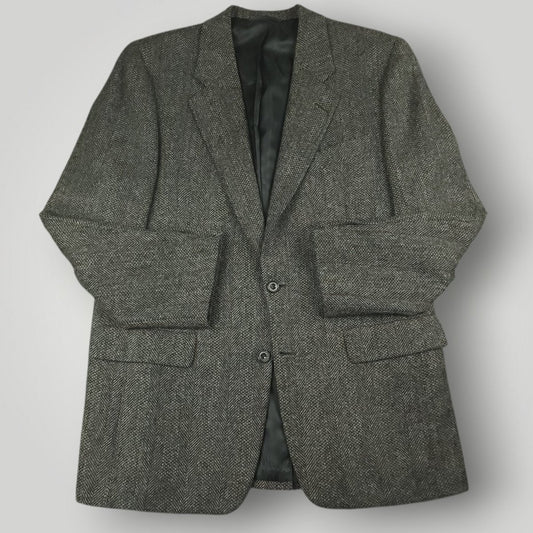
At its core, a tweed jacket is a structured or unstructured sport coat crafted from a rough, unfinished woolen fabric. Unlike smooth, tightly spun worsted wools used for corporate business suits, tweed is made from carded wool. The fibers are washed but not combed perfectly straight, leaving a slightly hairy, fibrous texture that traps air and provides immense warmth.
Tweed is a masterclass in color depth. It is rarely a solid, flat hue. Instead, different dyed wool fibers are blended together before spinning, resulting in a single yarn that might contain flecks of heather, gold, rust, and mossy green. These yarns are traditionally woven into classic patterns—such as herringbone, barleycorn, houndstooth, or windowpane grids.
The Origin of the Name
The story goes that the name was born from a simple clerical error in the 1830s. A London clerk misread the Scottish word "tweel" (the regional Scots word for twill) on an invoice from a mill along the River Tweed. Assuming the fabric was named after the famous river, it was marketed as "Tweed," and the name permanently stuck.
What Is Special About Tweed?
Tweed is not just another seasonal fabric; it occupies a unique position in textile history due to its sheer utility and visual character.
- Exceptional Weather Resistance: Originally engineered for Scottish sheep farmers and estate workers, traditional tweed is naturally water-resistant and windproof. The dense woolen fibers retain lanolin (the sheep's natural waterproofing oil), allowing a tweed sport coat to shrug off a light drizzle with ease.
- Unrivaled Depth of Color: Because the wool is dyed in raw batches rather than as a finished cloth, a single square inch of a tweed jacket reflects the landscape it came from—mimicking the earthy tones of peat, bracken, gorse, and granite.
- The Ultimate Shape-Retention: Tweed possesses incredible structural memory. A high-quality woolen tweed resists wrinkling completely, making it an exceptional travel jacket that naturally drapes beautifully over the body without requiring stiff internal canvas structures.
The Cultural Conundrum: Is Tweed "Old Money"?
The short answer is yes, historically—but with a rugged, functional twist.
In the late 19th and early 20th centuries, tweed became the definitive uniform of the British aristocracy's country pursuits. Wealthy elites purchased massive estates in Scotland for hunting, fishing, and shooting. To outfit their estate staff and guests, they commissioned custom "Estate Tweeds" (the conceptual ancestors of the District Check) designed to blend seamlessly into the local flora for camouflage.
This association with country manors, grouse moors, and Ivy League campuses cemented tweed as an anchor of the "Old Money" aesthetic. However, unlike flashy luxury items, tweed’s connection to wealth is rooted in utility, durability, and understatement. It represents an anti-fast-fashion philosophy: buying an item of such immense quality that it can be passed down through generations. Today, you don't need an estate to wear it; you just need an appreciation for rugged, functional tailoring.
Anatomy of a Classic: Identifying Traditional Tweed Jacket Styles
When shopping for vintage pieces or investing in a new wardrobe staple, you will find that classic tweed sport jackets are defined by specific, functional design details. Historically, these features weren't just decorative—they were engineered for the rugged demands of outdoor country pursuits, distinguishing a casual tweed sport coat from a formal city suit.
If you want an authentic, timeless silhouette, look for the "Holy Trinity" of classic tweed tailoring:
1. The Hardware: Woven Leather-Covered Buttons
The definitive choice for a traditional heritage jacket is the leather button. Unlike smooth horn or polishing metals, matte leather buttons don't glare in the sun or chip during field sports. Visually, their rich, braided texture perfectly complements the rugged, fibrous surface of the wool cloth, instantly giving the garment a relaxed, approachable character.
2. The Storage: Functional Patch Pockets
Unlike formal "jetted" pockets that are cut into the jacket's interior lining, patch pockets are constructed from separate pieces of tweed fabric and stitched directly onto the outside of the coat. This utilitarian design detail immediately softens the structure of the jacket, signaling that it is built for style versatility and casual wear rather than the boardroom.
3. The Reinforcement: Suede or Leather Elbow Patches
Originally born out of sheer necessity to prolong the lifespan of heavy woolen fabrics, elbow patches became an iconic style hallmark. Popularized heavily by mid-century American Ivy League style, these patches prevent friction wear at key stress points. Today, they serve as a premier visual indicator of a true, hard-wearing heritage garment.
Structural Silhouettes: Ivy League vs. British Country
Beyond the surface accents, classic tweed sport coats generally fall into two distinct structural design styles:
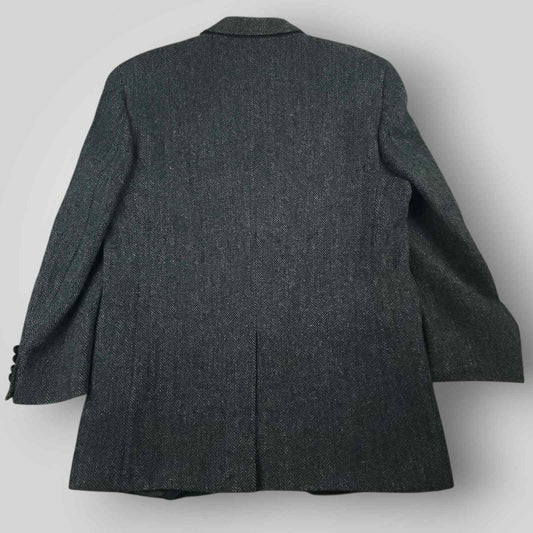
- The American "Sack" Jacket (Authentic Ivy Style): This iconic mid-century silhouette features a 3-roll-2 button stance (three buttons, where the lapel rolls down to hide the top button, leaving only the center one to be fastened), a sharp hook vent at the rear seam, and a natural, unpadded shoulder. It offers a comfortable, straight, boxy drape that layers beautifully.
- The British Country Jacket: A more tailored, structured silhouette featuring distinct shoulder padding, a nipped waist, and frequently an extra ticket pocket sitting just above the right hip pocket—a nod to historic English equestrian and rail travel attire.
The Battle of the Heritage Weaves: Harris vs. Donegal vs. Moon
When curating your collection of sport tweed coats, you will continually cross paths with three legendary geographic designations. None is objectively "better" than the others, but each expresses an entirely different stylistic voice, weight, and texture.
| Feature | Harris Tweed | Donegal Tweed | Abraham Moon Tweed |
| Origin | Outer Hebrides, Scotland | County Donegal, Ireland | Yorkshire, England |
| Heritage & Craft | Protected by a strict Act of Parliament; hand-woven at the islanders' homes. | Regional heritage product, traditionally hand-woven with iconic "slubs." | Woven by one of Great Britain’s last fully vertical historic mills (est. 1837). |
| Texture & Weight | Coarse, dense, heavy, and armor-like. | Softer, lighter, and highly pliable. | Balanced, substantial structure with a surprisingly soft, refined hand-feel. |
| Signature Visual | Deeply heathered, rich traditional patterns (herringbone, windowpane). | Distinctive plain or twill weave peppered with vibrant, multicolored flecks. | Clean, classic British country patterns (estate checks, sharp herringbones). |
Which Is Better for Your Wardrobe?
- Choose Harris Tweed if you want the ultimate armor against the cold, a traditional heavy drape, and an unmistakable vintage stiffness that speaks to classic British and mid-century Ivy style. It is indestructible and built for the elements.
- Choose Donegal Tweed if you prefer a lighter, softer sport coat that feels comfortable right out of the gate, layers effortlessly in transitional autumn weather, and offers an artistic, casual pop of color through its iconic flecked signature.
- Choose Abraham Moon Tweed if you want the best of both worlds. It gives you the heritage weight, structure, and classic pattern definition of a premium UK wool, but with a significantly softer finish that doesn't require a ten-year break-in period. It’s the ultimate "sleeper hit" for a modern, versatile wardrobe.
The Haberdasher’s Guide: How to Wear a Tweed Jacket
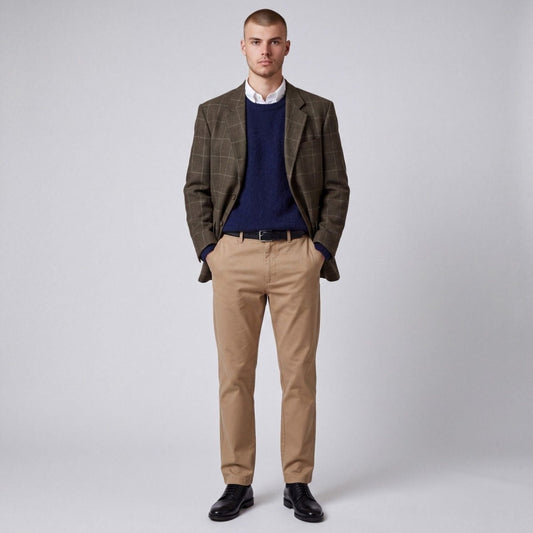
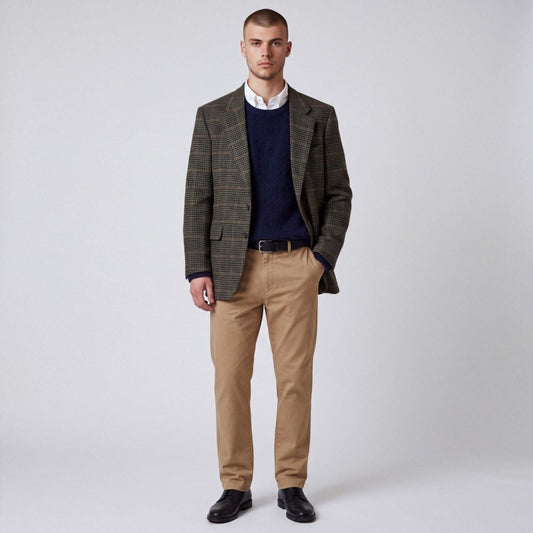
The single biggest trap a man faces with tweed jackets is the "Costume Trap." If you style a heavy tweed coat with rumpled, ill-fitting trousers and an oversized flat cap, you look like you’re auditioning for a period drama.
To bring tweed into a contemporary context, you must treat it as a rich textural anchor paired with clean, intentional elements.
How to Style a Tweed Jacket for a Casual Look
Tweed is inherently casual by heritage standards—it was never meant for the corporate boardroom. To pull it into a sharp, weekend-ready rotation, follow this three-part casual blueprint:
1. Frame it with Premium Denim
The easiest way to strip the academic stiffness out of a brown or grey herringbone tweed jacket is to drop it over a pair of clean, dark indigo raw denim jeans. The utilitarian heritage of the denim perfectly balances the rugged nature of the wool. Ensure the denim is tailored with a clean break to keep the look sharp.
2. Swap the Button-Down for Casual Knitwear
Instead of a stiff dress shirt, layer your tweed sport coat over a high-quality crewneck t-shirt, a fine-gauge merino wool turtleneck, or a textured cotton polo shirt. A charcoal grey, navy, or oatmeal sweater worn under an unbuttoned tweed coat creates an effortless, high-low casual aesthetic that works perfectly in modern restaurants or creative workspaces.
3. Ground the Outfit with Contemporary Footwear
Leave the formal oxfords at home. Ground your casual tweed ensemble with minimalist leather sneakers (white or cream), rugged suede Chelsea boots, or classic leather loafers. The modern footwear instantly signals that the outfit is grounded in the present day.
Answering the Web: People Also Ask
To clear up the common myths floating around modern style forums, let's address the technical and practical questions directly.
Does Tweed Get Better with Age?
Unequivocally, yes. High-quality woolen tweed is one of the very few textiles that actively improves with decades of wear. Freshly woven tweed—particularly Harris Tweed—can feel somewhat stiff and abrasive out of the box.
As you wear the jacket, the heat of your body and the friction of movement naturally break down that initial stiffness. The wool softens, molding precisely to your shoulder line and elbows, while the fibers gently bloom to reveal even more depth of color. A twenty-year-old vintage tweed jacket possesses a soft, supple drape and character that a factory-new garment simply cannot replicate.
When to Stop Wearing Tweed?
Because tweed is a heavy, heat-trapping seasonal cloth, you should let the thermometer dictate your wardrobe rotation.
- The Hard Stop: As a general rule, stop wearing heavy woolen tweed jackets once the consistent daily temperature climbs past 65°F (18°C).
- The Seasonal Shift: Tweed belongs firmly in the autumn, winter, and early spring months. Wearing a heavy Harris Tweed coat in the dead of a humid summer not only looks out of place, but it will also cause you to overheat rapidly. When May rolls around, pack your tweeds away with cedar blocks and transition to open-weave linen, hopsack, or tropical wool separates.

The Warm-Weather Exception: What Is a Summer Tweed Jacket?
While a traditional, heavyweight tweed sport jacket belongs firmly in the cooler months, you don't have to pack the texture away entirely when the temperature climbs. Enter the Summer Tweed Jacket.
"Summer tweed" is a contemporary tailoring term for sport coats that replicate the rich, multi-tonal, and slubby visual texture of traditional tweed but are engineered strictly for warm-weather breathability. If you want to maintain a high-texture wardrobe in the spring and summer, look for these two structural shifts:
1. The Fabric Chemistry: Silk, Linen, and Wool Blends
Instead of 100% heavy carded wool, summer tweeds rely on a lightweight blend of natural fibers—often a mix of silk, linen, and lightweight wool (frequently referred to as a "Maddox" or "Delave" blend).
- Linen provides incredible airflow and a relaxed, crisp structure.
- Silk adds high-tensile strength and creates those beautiful, irregular "slub" textures that mimic traditional Irish Donegal.
- Lightweight Wool ensures the jacket retains its shape, drapes cleanly, and resists hard wrinkling.
2. The Internal Infrastructure: Unlined or Half-Lined Construction
The secret killer of breathability isn't just the outer fabric—it's the interior lining. Traditional winter tweed coats are fully lined with dense synthetic materials that trap body heat like a greenhouse.
A true summer tweed jacket features an unlined or half-lined (skeleton) construction. By stripping away the interior canvas and shoulder padding, air can pass cleanly through the open weave of the fabric. This gives the sport coat a highly breathable, casual, and effortless drape that looks incredibly sharp over a polo or linen shirt, even when the thermometer pushes past 75°F (24°C).
Why Tweed Jackets Rule the Secondhand Market
Few tailored garments hold their structural integrity quite like a vintage tweed sport coat. If you are looking to build a sustainable, high-character wardrobe, the secondhand marketplace is your premier hunting ground for several reasons:
- Incredible Structural Camouflage: The complex, multi-tonal nesting of herringbone, heather, and flecked weaves is highly forgiving. Minor vintage flaws or tiny signs of superficial wear vanish completely into the visual depth of the wool fabric, ensuring the jacket always looks pristine.
- Vintage Fabric Weight: Modern off-the-rack retailers frequently thin out their fabrics to save on production costs. Buying a vintage tweed jacket from iconic mid-century heritage makers guarantees you are getting the substantial, heavy-hanging cloth that gives the garment its legendary silhouette and wind-blocking power.
- Sustainable Haberdashery: Choosing a pre-owned woolen garment keeps premium natural fibers in circulation, honoring the generational craft of the original weavers while reducing environmental impact.
The Golden Rule of Tweed: Daily Care & Longevity
Because high-quality woolen tweed is built to last for generations, it requires very little daily maintenance—but a few correct habits make all the difference. Never dry clean your tweed jacket more than once a season, as harsh chemicals strip away the wool's natural, protective lanolin oils. Instead, invest in a high-quality horsehair garment brush to whisk away surface dust and dirt after each wear, and always hang it on a thick, contoured wooden hanger to preserve the natural shape of the shoulders. For a complete, step-by-step breakdown on deep cleaning, seasonal storage, and treating unexpected stains, check out our comprehensive guide on The Complete Guide to Caring for Suits, Sport Coats, and Blazers to ensure your investment pieces look pristine for decades to come by using the button below.
Final Thoughts
The beauty of the tweed jacket lies in its absolute refusal to fade into irrelevance. It honors two centuries of rugged coastal heritage while remaining completely adaptable to the casual, texture-driven needs of the modern closet.
Whether you opt for the stark, indestructible armor of a Scottish Harris Tweed or the artistic, multicolored flecks of an Irish Donegal, a well-chosen tweed sport coat is an investment in permanent style infrastructure. Find the right fit, dial up the contrast with casual denim or knitwear, and let the texture do the heavy lifting for you.