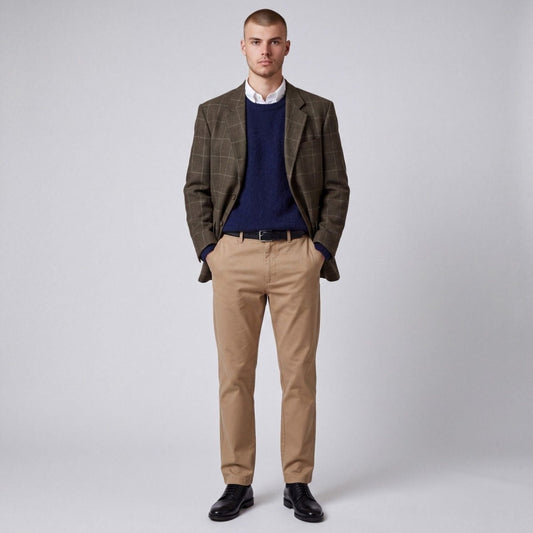
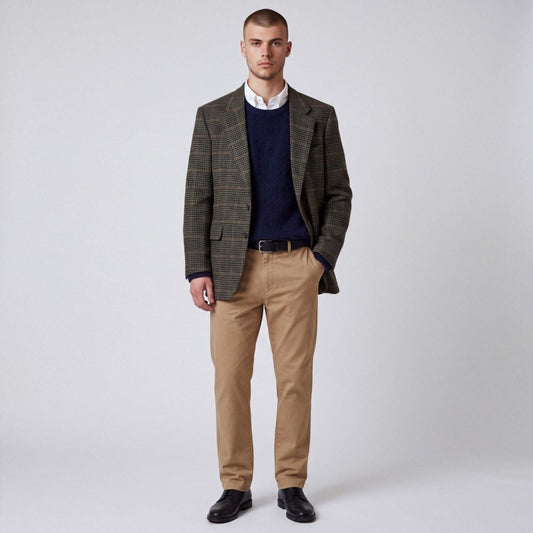
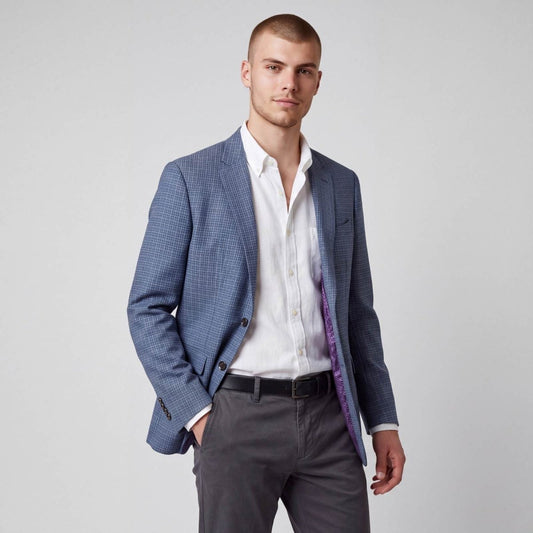
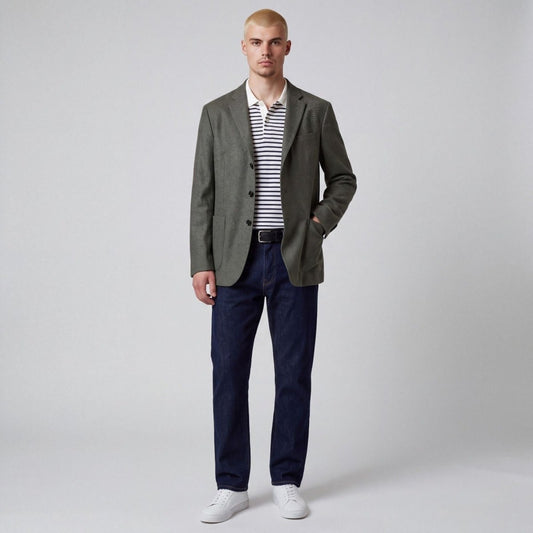
The Scale of Style: Slim vs. Regular vs. Wide Lapels (The Ultimate Guide)
In the realm of classic menswear, the front of a tailored jacket acts as a visual thesis statement. Before a single word is spoken, the roll of your jacket’s chest, the drape of its fabric, and the sweep of its lapels have already signaled your stylistic perspective to the room. Yet, despite its visual prominence, the lapel remains one of the most frequently misunderstood components of blazer anatomy.
Walk into any modern clothing shop, or browse online forums dedicated to contemporary style, and you will quickly observe a persistent terminological confusion. Enthusiasts and casual shoppers alike routinely interchange lapel type (the geometric cut of the garment’s edge) with lapel style (the physical, horizontal scale of the fold). You will hear a man declare that he is searching for a "peak lapel jacket" under the assumption that a peak is inherently bold and wide, completely blind to the existence of the razor-thin, two-inch peak lapels that saturated the design houses of the early 2010s. Conversely, another might avoid a classic notch lapel, believing it to be strictly narrow and conservative, unaware that the sweeping, four-inch notch lapels of the mid-century represent some of the most visually commanding tailoring ever engineered.
Before we can analyze the structural nuances of lapel width, we must establish a foundational baseline of tailoring nomenclature.
The Fundamental Anatomy: Shape vs. Scale
To understand a tailored jacket is to understand that its architecture is plotted on two distinct, independent axes: Form and Scale.
- Lapel Type (Form/Shape): This refers strictly to the perimeter silhouette of the collar assembly. It is the geometric cut of the cloth. The three structural pillars of lapel shape are the Notch (where the collar meets the lapel at an open step), the Peak (where the lapel points upward and outward toward the shoulder seam), and the Shawl (a continuous, unbroken curve of cloth rolling from the neck to the buttoning point).
- Lapel Style (Scale/Width): This refers exclusively to the horizontal dimension of the cloth at its widest point—completely independent of whether that cloth terminates in a notch, a peak, or a smooth curve.
If you are looking for a jacket that flatters your frame, balances your facial structure, and projects an aura of timeless, masculine elegance, you are not merely choosing between a notch or a peak. You are making a calculated decision about scale. In this guide, we are setting shape aside entirely to explore the physical reality, historical context, and proportional laws of the three primary lapel styles: Slim, Regular/Classic, and Wide.
What Does "Lapel" Actually Mean?
To appreciate why this strip of cloth carries such visual gravity, we must look to its etymology and construction. In historical tailoring, the lapel is structurally defined as the jacket reverse—a term derived from the French revers, meaning "the turned-back part".
When a jacket front is cut, the fabric does not simply end at the breast; it is engineered with an extension of cloth that is folded backward over the chest. This folded flap is the lapel. In high-grade, canvas-constructed tailoring, this fold is not ironed flat like a piece of origami. Instead, it is hand-padded with thousands of tiny, invisible stitches to a layer of animal-hair canvas, creating a three-dimensional "roll" that floats off the chest.
In online retail spaces, you will frequently encounter terms like "lapel suit" or "lapel jacket for men". While technically redundant—as virtually all traditional suit jackets and sport coats possess lapels by definition—these terms have emerged in modern search nomenclature to distinguish structured, formal tailoring from collarless outerwear, flight jackets, or casual knitwear. If a garment is a "lapel suit," it means it carries the structural heritage of the classic revers. And because the revers sits directly over your chest and lungs—the visual center of your torso—its width dictates the perceived proportions of your entire upper body.
The Technical Metric: How to Measure a Lapel
To discuss lapel scale with the precision of a master tailor, you cannot rely on vague, subjective visual assessments. You must know how to physically measure the cloth.
To determine the true width of a jacket's lapel, lay the garment completely flat on a table, buttoned. Locating the widest point of the lapel—which typically sits just below the notch or the peak—measure horizontally and perpendicularly from the inner fold (where the lapel rolls back from the chest) to the outer edge (the stitched seam). Do not measure diagonally or follow the angle of the gorge seam. The resulting figure is the true width of your lapel.Understanding this measurement allows us to plot any tailored jacket along a highly defined scale:
- The Slim Lapel: Measuring under 2.75 inches (7 cm).
- The Regular/Classic Lapel: Measuring between 3.0 and 3.5 inches (8.25 cm).
- The Wide Lapel: Measuring between 3.75 and 4.5+ inches (10 cm).

The Slim Lapel: The Modernist Silhouette
The Anatomy and Philosophy of the Narrow Cut
The slim lapel is defined by its lack of visual footprint. By keeping the revers narrow—often measuring a mere 2.0 to 2.5 inches—the jacket front remains clean, minimalist, and highly linear.
This scale is fundamentally tied to modernism. It strips away the sweeping curves and heavy drapes of traditional tailoring in favor of razor-sharp, geometric efficiency. Structurally, slim lapels are almost always accompanied by a high gorge (the seam where the collar meets the lapel) to emphasize a vertical, elongated silhouette.
The Structural Reality: It is critical to note that slim lapels are almost exclusively found on slim-fit suit jackets and sport coats. Because a narrow lapel lacks visual weight, tailors must cut the entire garment with a tighter chest, higher armholes, a narrower shoulder width, and a shorter, cropped jacket length to keep the overall silhouette from looking mismatched and bottom-heavy.
Current Trends: Are Narrow Lapels Still in Style?
To answer this honestly, we must look at blazer history and the shifting tides of menswear. The ultra-skinny "pencil" lapels that dominated the indie-rock and "sleek corporate" aesthetics of the late 2000s and 2010s have largely fallen out of favor with the style vanguard. In 2026, the trend has firmly corrected toward fuller, more relaxed silhouettes.
However, narrow lapels have not vanished. Today, they have settled into a specific, highly deliberate niche. Rather than being the default choice for every man, slim lapels are now utilized as a specialized tool for sleek, evening-focused tailoring, modern minimalist styling, and hyper-tailored urban wear. The trend is no longer about squeezing into a jacket that is two sizes too small; it is about utilizing a clean, narrow 2.5-inch line to project an understated, contemporary sharpness.
Pros, Cons, and Body Type Compatibility
- The Benefits: Slim lapels are incredibly flattering on lean, slender, or highly athletic frames with narrow shoulders. Because they do not occupy much visual real estate on the chest, they keep a smaller frame from looking overwhelmed by heavy cloth. Additionally, for shorter men, the long, uninterrupted vertical lines of a narrow lapel can create the optical illusion of added height.
- The Drawbacks: The major limitation of the slim lapel is its inability to build structure. Because it does not sweep outward toward the shoulder, it offers zero assistance in creating a masculine "V-taper" silhouette. If you have broad shoulders or a larger chest, a slim lapel will look comically out of proportion—appearing like a tiny strip of tape stuck to your jacket.
- The Best Off-the-Rack Brands: If you are hunting for highly refined, modern slim-lapel blazers and suits, look to design houses that have mastered this specific, linear architecture. Brands like Theory, Hugo Boss, Sandro, and Karl Lagerfeld consistently produce sharp, high-quality garments engineered around a narrow, contemporary scale.
How to Style a Slim Lapel Blazer
Styling a slim lapel is entirely an exercise in proportional downsizing. The most common mistake men make is wearing a modern, slim-fit jacket with accessories and bottoms that carry too much physical volume. Use this exact blueprint to maintain clean, uninterrupted lines:
- The Shirt: Avoid wide-spread or cutaway collars. These require wide tie knots that will physically crowd out the narrow lapels. Instead, pair your jacket with a small semi-spread collar, a narrow forward-point collar, or a modern, short button-down.
- The Neckwear: Your neck tie blade must match the scale of your lapel. Opt for a skinny/slim tie that measures around 2.5 to 2.75 inches at its widest point. A standard 3.25-inch tie paired with a 2.25-inch lapel will look heavy, unbalanced, and structurally mismatched.
- The Trousers: To match the sharp, streamlined proportions of a slim-fit jacket, opt for slim-cut, flat-front trousers with a minimal break. Avoid pleats, cuffs, or wide-leg cuts, as the excess fabric at the legs will make the narrow upper half of your outfit look incredibly top-heavy.
The Regular/Classic Lapel: The Timeless Midpoint
Defining the Regular Scale
In the terminology of classic tailoring, "regular" and "classic" are entirely synonymous. Measuring between 3.0 and 3.5 inches—with 3.25 inches (approximately 8.25 cm) acting as the exact mathematical sweet spot—the classic lapel is the historic baseline of menswear. Even the mid-century Ivy League favorites favored a moderate, regular lapel width that stood in perfect proportional harmony to the body.
It is called "classic" because it is designed to be completely neutral. It does not chase the hyper-modern minimalism of the slim trend, nor does it lean into the dramatic, commanding presence of the wide lapel. It is engineered to sit in perfect, quiet balance with the natural human torso.

Timelessness and Formality
When men ask: "Are regular lapels more traditional than notch or peak lapels?" they are mixing up type (i.e., notch) and style (i.e., regular). Regular notch and regular peak lapels are both incredibly traditional. The true distinction of a regular-width lapel is its absolute immunity to the passage of time.
If you look at a fashion photographs of a man wearing a regular lapel jacket from 1960, 1990, 2026, or look ahead to 2050, the jacket will never look dated. It is the default, standard width of the timeless gentleman's wardrobe, making it the most appropriate scale for formal events, job interviews, corporate boardrooms, and highly traditional weddings. It represents zero stylistic risk.
Pros, Cons, and Body Type Compatibility
- The Benefits: The classic lapel is universally flattering. It doesn't distract the eye, meaning it lets the fabric quality and overall tailoring do the talking. It also offers the maximum longevity of any garment in your closet—it will survive every trend cycle unscathed.
- The Drawbacks: Because it is designed to be neutral, it lacks the styling "attitude" of the other two scales. It does not look hyper-modern or minimalist like a slim lapel, nor does it project the dramatic, commanding confidence of a wide lapel. It is the safe, middle-of-the-road default.
- Body Type Compatibility: Truly universal. Whether you are tall, short, stocky, athletic, or slender, a 3.25-inch lapel sits in perfect proportion to the human chest. It does not accentuate flaws or create drastic visual illusions—it simply frames the torso naturally.
- Where to Buy Online: Guide readers to classic online outfitters that prioritize classic mid-century proportions over hyper-modern trends. Brands like Spier & Mackay, Drake's, J.Press, and Sid Mashburn are highly regarded for keeping their lapels firmly rooted in the classic 3.0 to 3.5-inch range.
How to Style a Regular Lapel Sport Coat
Because the classic lapel sits directly in the center of the styling spectrum, your accessory choices should follow suit. Avoid extremes in either direction to maintain a clean, harmonious drape:
- The Shirt: Pair this jacket with classic shirt collars that feature moderate point lengths, such as a standard semi-spread collar or the soft roll of a classic Oxford Cotton Button-Down (OCBD).
- The Neckwear: Your neck tie blade should measure between 3.0 and 3.25 inches. Classic silk repp stripes, neat foulards, and textured wool knit ties sit perfectly within the boundaries of a regular lapel without competing for attention.
- The Trousers: Pair classic lapels with mid-rise, straight-leg, or slightly tapered trousers. Flat-front styles or gentle single-pleated trousers with a subtle cuff or a medium break align beautifully with the timeless, balanced aesthetic of a regular-scale jacket.
The Wide Lapel: The Classic Gentleman’s Command
The Anatomy of True Scale: What is Considered a Wide Lapel?
To be considered a true wide lapel, the horizontal measurement must start at 3.75 inches and can comfortably extend to 4.5 inches or more. Wide lapel is also known as big lapel as a slang reference due to the extreme wideness of the lapel.
This is the scale of traditional drape tailoring. When you widen the lapel, you are not simply adding fabric; you are changing the entire geometric layout of the jacket front. A wide lapel requires a slightly lower gorge height (the junction of the collar and lapel) and a subtle "belly"—a gentle, convex curve along the outer edge of the lapel—which gives the fabric a beautiful, sweeping roll as it tumbles down to the fastening button.

Are Wide Lapels Coming Back?
Yes—and they are back with immense authority. The trend landscape of 2026 has witnessed a massive, widespread rejection of the stiff, tight, and skimpy garments of the previous decade. Modern men are craving comfort, ease, and a return to classic elegance.
As trousers have become wider and pleats have returned, jacket shoulders have softened, and lapels have naturally scaled upward to keep the entire silhouette in balance. A wide lapel is no longer viewed as a retro costume piece; it is recognized as the mark of a man who understands traditional tailoring and commands a mature, intentional personal style.
Pros, Cons, and Body Type Compatibility
- The Benefits: A wide lapel sweeps across the chest, drawing the eye outward toward your shoulder joints. This outward sweep creates a highly flattering, powerful optical illusion: it visually broadens your chest and shoulders while making your waist appear narrower by comparison. It creates the classic, masculine V-taper silhouette that flatters almost every male frame.
- The Drawbacks: Because wide lapels carry so much visual presence, they are completely unforgiving of a poor fit. If the jacket is too tight across the chest, the lapels will instantly buckle and pop outward. Additionally, they cannot be worn with modern, skimpy accessories without looking completely disjointed.
-
Body Type Compatibility:
- Broad/Athletic Chests: A wide peak lapel perfectly complements natural shoulder breadth.
- Shorter/Slight Frames: A wide peak lapel draws the eye vertically, adding perceived height, while an overly wide notch lapel can sometimes swallow a smaller frame.
- Tall or Larger Men: A wide lapel is practically mandatory to ensure the scale of the tailoring matches your actual physical presence.
- To find genuine, hand-padded wide lapels with a beautiful, floating roll, the best path is to hunt through men's vintage clothing stores and online shops specializing in authentic vintage men's clothing. Look for garments from the golden eras of drape tailoring (like the mid-20th century) that were constructed with heavy wools and robust chest canvases.
How to Style a Wide Lapel Blazer
When styling a wide lapel sport coat or suit, or even when wearing a suit jacket casually with denim, you must follow the rules for wearing a sport coat and lean heavily into the Law of Proportional Scale. You cannot wear delicate, modern accessories or skimpy bottoms with a jacket of this magnitude:
- The Shirt: Pair your wide-lapel jacket with a shirt that features a substantial collar. A classic spread collar or a long-point button-down collar with at least 3.25-inch collar points is essential to keep the collar from slipping behind the wide lapels.
-
The Neckwear: Your tie must measure between 3.5 and 4.0 inches at its widest point. A substantial, heavy silk jacquard or a thick wool-silk blend tie will hold its own against the sweeping lapels, allowing you to tie a beautifully balanced, proud four-in-hand knot.
Your neck tie must measure between 3.5 and 4.0 inches at its widest point. A substantial, heavy silk jacquard or a thick wool-silk blend tie will hold its own against the sweeping lapels, allowing you to tie a beautifully balanced, proud four-in-hand knot. - The Trousers: Wide lapels require trousers with corresponding weight and volume. Opt for classic mid-to-high rise trousers featuring single or double pleats, a relaxed or straight-leg drape, and a generous 1.75 to 2-inch cuff with a full or medium break. This anchors the visual weight of the sweeping lapels.
The Haberdasher’s Law of Proportional Harmony
To master the scale of style, you must understand that your jacket does not exist in a vacuum. It is part of an ecosystem. The true secret to looking impeccably dressed in any lapel width—be it slim, regular, or wide—is adhering to the Law of Proportional Harmony or Proportional Fit.
To achieve this visual balance, always memorize these three unbreakable rules of the haberdashery:
The Tie Blade Mirror
The widest part of your tie’s blade must always roughly mirror the widest part of your jacket’s lapel.
- If you are wearing a slim lapel (2.5 inches), your tie should be a slim 2.5 inches.
- If you are wearing a classic regular lapel (3.25 inches), your tie should be a classic 3.25 inches.
- If you are wearing a sweeping wide lapel (4.0 inches), your tie must scale up to a generous 3.5 or 3.75 inches. Breaking this rule instantly fractures the visual symmetry of your chest, making your outfit look disjointed and poorly planned.
The Shirt Collar Point Scale
The length of your shirt collar points must scale in direct proportion to your lapel width.
- Slim lapel demands a shorter, more compact collar point so the lapel doesn't overwhelm it.
- Wide lapel demands a collar with long, sweeping points that can tuck neatly beneath the lapel edge, preventing a messy, floating collar that breaks the clean vertical lines of your suit jacket.
The Fit and Chest Contour
Regardless of the scale you choose, the physical drape of your jacket depends entirely on how it fits across your chest. This is why it is absolutely vital to get blazer tailored.
With wide lapels especially, if the jacket chest is too tight, the lapels will "bow" or buckle outward, popping off your chest like a pair of wings. A master tailor will ensure the chest canvas drapes cleanly over your pectoral muscles, allowing the lapels to lie perfectly flat, creating a clean, unbroken sweep of fabric from your collarbone down to your waist.
Final Thoughts: Building an Intentional Wardrobe
In the end, choosing between slim, regular, and wide lapels is not about blindly following the trend cycle of the moment. It is about building a highly intentional, timeless wardrobe that respects your personal anatomy and tells a clear story about who you are.
If your aesthetic leans toward the sleek, modern, and minimalist, the slim lapel remains a sharp, surgical tool in your wardrobe. If you want a versatile, bulletproof foundation that will never look out of place or out of date, the classic regular lapel is your timeless anchor. But if you want to embrace the romance, structure, and history of traditional menswear—and project a commanding, masculine silhouette that stands out in a sea of generic, off-the-rack fashion—then it is time to step up your scale, embrace the sweep of the wide lapel, and let your style speak with true authority.